You've applied to 40, 60, maybe 100 jobs. You're qualified. You've done this work before. And yet your inbox is silent. If you're wondering why not getting callbacks is your reality despite all that effort, the answer is almost always sitting in your resume, and it's usually one of the same ten fixable problems. Here's what's actually killing your response rate.
The Invisible Filter Most Candidates Never Think About
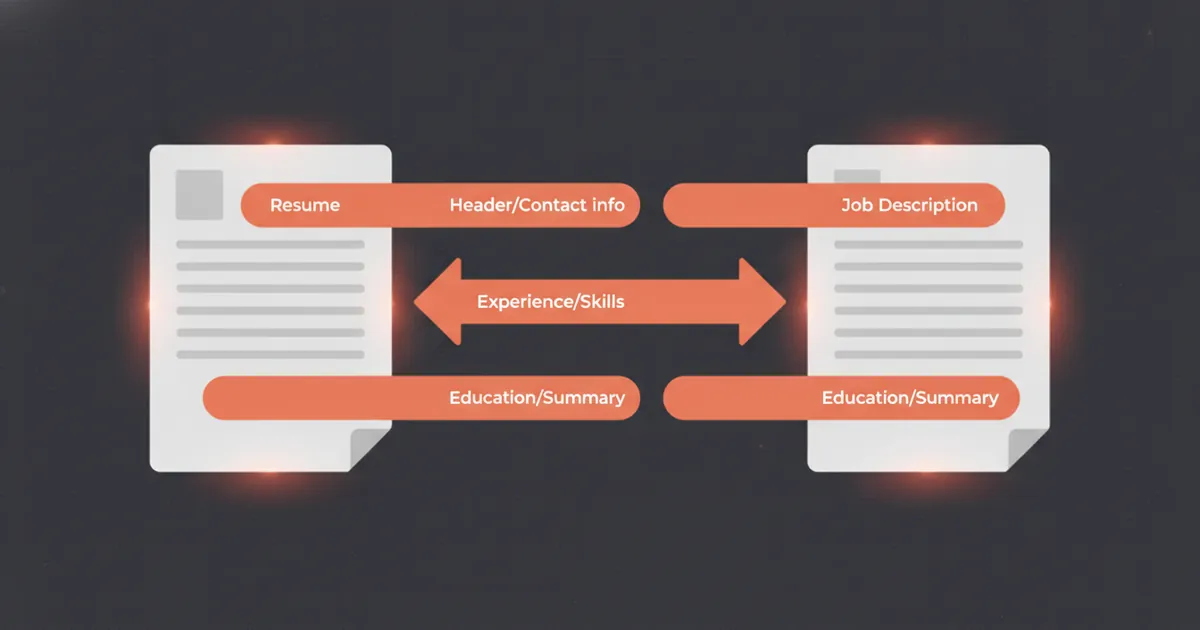
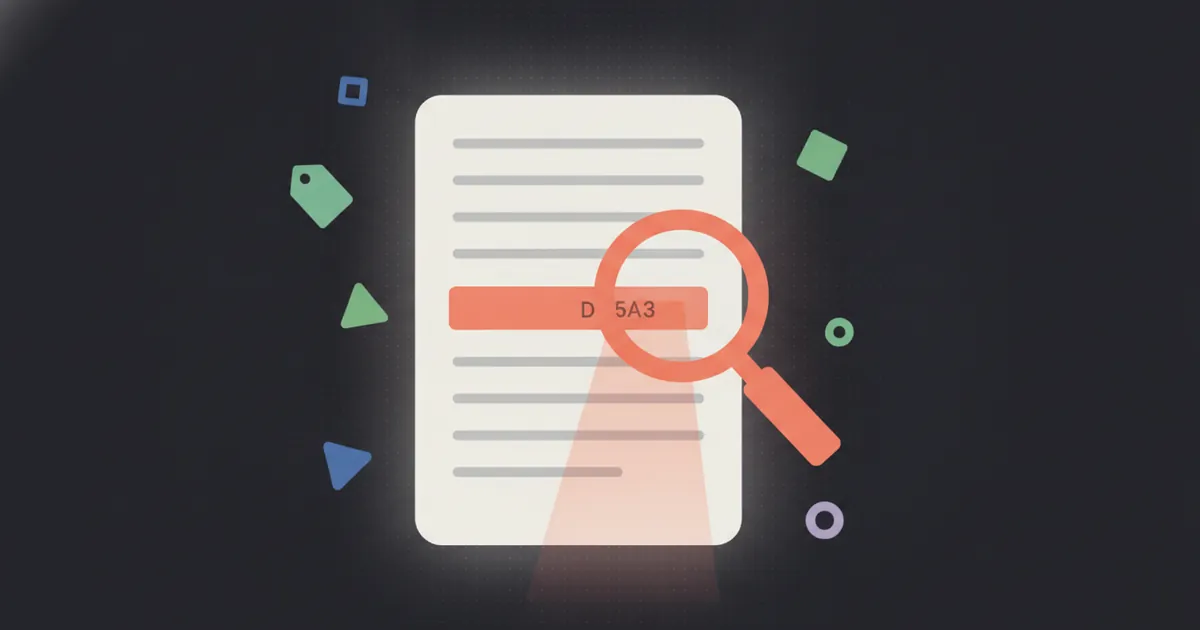
Before a single human reads your resume, software does. According to a Jobscan survey of 384 recruiters, 99.7% use an Applicant Tracking System (ATS) to filter candidates. At Fortune 500 companies, that number is effectively 100%. These systems scan, parse, and rank your resume against the job description before it ever reaches a hiring manager's screen.
A 2026 analysis found that roughly 40% of applications are screened out before any human review. That means nearly half of all applicants fail at step zero, not because they weren't qualified, but because their resume couldn't be read correctly by a machine.
Fixing your ATS readability alone can dramatically change your callback rate. The mistakes below address both machine and human reviewers, because you need to survive both.
Mistake 1: Submitting a Generic Resume Every Time
This is the single biggest driver of why not getting callbacks happens at scale. Sending the same resume to 50 different jobs is efficient for you and useless to everyone reading it. ATS systems rank resumes by keyword match against the specific job posting. Jobscan recommends hitting at least a 75-80% match rate to meaningfully improve interview chances.
What this looks like in practice: the job description says "cross-functional collaboration" and your resume says "worked with multiple teams." Those phrases do not match. The ATS scores you lower. A recruiter who glances at your resume for 11 seconds (the median initial scan time, per a 2025 InterviewPal study) doesn't see the connection either.
Tailoring doesn't mean rewriting your resume from scratch for every application. It means mirroring 8-12 keywords from the job posting, especially in your skills section and the first bullet under each relevant role. Use the exact language the employer uses, not synonyms.
OfferFlow's resume builder lets you maintain a master resume and quickly generate tailored versions per application without starting over each time.
Mistake 2: Using Tables, Text Boxes, and Columns
Your resume looks sleek with its two-column layout and sidebar skill bars. It also looks like garbled nonsense to most ATS software. These systems read resumes linearly, left to right, top to bottom. When they hit a table or text box, they either skip it entirely or output "[NULL]" where your contact information used to be.
Custom fonts, headers, footers, and graphics have the same problem. Many ATS scrapers ignore content placed in headers and footers, which is exactly where candidates tend to put their name, email, and phone number.
The fix is straightforward: use a clean single-column layout, standard section headings (Work Experience, Education, Skills), and a common font like Calibri, Arial, or Georgia. Save the design flourishes for a portfolio site.
Mistake 3: A Professional Summary That Says Nothing
"Results-driven professional with a passion for excellence seeking a challenging role where I can leverage my skills." This sentence has been in resumes for 30 years and has never once convinced a recruiter to keep reading.
Your summary is prime real estate. It's the first thing a human reads after the ATS lets you through. It needs to answer three questions in three sentences: Who are you professionally? What do you specifically do well? What kind of role are you targeting?
Example of a usable summary: "Marketing operations manager with 7 years building demand-gen programs at B2B SaaS companies under $50M ARR. Led end-to-end HubSpot implementations, managing $1.2M in annual ad spend. Looking to bring growth-stage pipeline-building experience to a VP-track role."
That's specific, searchable, and immediately tells a recruiter whether you're relevant.
Mistake 4: Responsibilities Instead of Results
This is the gap between "Managed social media accounts" and "Grew organic Instagram following from 4,200 to 31,000 in 14 months by launching a weekly founder interview series." The first is a job description. The second is evidence.
Recruiters are trained to look for impact, not activity. A TalentWorks analysis of over 6,000 applications found that resumes hitting the 475-600 word sweet spot, focused and specific, got double the interview callbacks compared to bloated or thin resumes.
For every bullet, ask: what was the outcome? What changed because I did this? If you don't have exact numbers, use ranges ("increased revenue by roughly 20%"), qualitative comparisons ("reduced manual reporting time by half"), or team-level metrics ("as part of a team that closed $4M in new ARR"). Something beats nothing.
Mistake 5: An Unprofessional or Missing Email Address
This one is so quick to fix that it's embarrassing how often it tanks applications. A 2026 report found that using an unprofessional email address, think firstname.lastname84@gmail.com is fine; partyanimal99@hotmail.com is not, reduces callback rates by 76%.
Your email address should be a variation of your name. If your name is common, add a middle initial or your city. Set up a dedicated job-search address if needed. And make sure the link actually works, a surprising number of candidates submit resumes with typos in their own email address.
Mistake 6: Ignoring the LinkedIn Profile Line
Adding a LinkedIn profile URL to your resume is no longer optional. A ResumeGo field experiment of 24,570 applications found that candidates who included a link to a complete LinkedIn profile received a 71% higher callback rate (13.5% vs. 7.9%) compared to those who didn't include one.
The operative word is "complete." A sparse LinkedIn profile with no photo, no summary, and three bullet points under each job will hurt more than help. Before you start applying, treat your LinkedIn as an extended resume. Full work history, recommendations if you have them, skills section filled out, and a photo that looks professional.
Make sure the URL on your resume is your custom LinkedIn URL (linkedin.com/in/yourname), not the auto-generated string of numbers LinkedIn assigns by default.
Mistake 7: Wrong Resume Length for Your Experience Level
The one-page-only rule is a myth, and research proves it. A ResumeGo study of 482 hiring professionals found recruiters were 2.3 times more likely to prefer two-page resumes over one-pagers. Those two-page resumes also scored 21% higher on a 10-point rating scale for communicating a candidate's credentials. Staffing professionals spent an average of four minutes and five seconds on two-page resumes versus two minutes and twenty-four seconds on one-pagers.
The right length depends on experience level:
- 0-3 years of experience: one page is appropriate and expected
- 4-10 years of experience: one to two pages, never cramming everything onto one at the expense of white space
- 10+ years of experience: two pages; a third page is rarely justified
What you should never do: shrink your margins to 0.4 inches and reduce font size to 9pt to force everything onto one page. Unreadable beats concise every time.
Mistake 8: Skill Lists With No Context
A wall of 30 skills at the bottom of your resume ("Excel, PowerPoint, Salesforce, Slack, Asana, Zoom, Google Analytics, SQL, Python, JavaScript...") tells a recruiter almost nothing. Anyone can claim any skill on a list.
Context-less skill sections are also ATS traps in both directions: candidates stuff in keywords they barely know to game the system, and recruiters have learned to discount skill lists as a result.
The better approach: integrate skills into your experience bullets where they become verifiable. "Built a Python script to automate weekly inventory reconciliation, reducing a 6-hour manual process to 20 minutes" is more credible than "Python" in a skill list. Keep a skills section, but make it tight, 8-12 actual competencies, focused on the requirements of the roles you're targeting.
Mistake 9: No Dates, Inconsistent Dates, or Gaps Left Unexplained
Dates matter for two reasons. First, many ATS systems filter on minimum years of experience. If your dates are inconsistent, "Jan 2019" in the resume field but "2018" in the application form, some systems flag it as a discrepancy. Second, humans notice gaps.
A gap isn't disqualifying. An unexplained gap creates unnecessary doubt. If you took 18 months off for caregiving, a health issue, or a career pivot, a single parenthetical is sufficient: "(Career break, full-time caregiver, 2023-2024)" or "(Career transition, completed UX design bootcamp, 2023)". That's it. Recruiters aren't looking to penalize life circumstances; they're looking for red flags, and "nothing listed for 18 months" reads as one until explained.
For roles you're applying to that require specific industry experience, role-specific interview prep resources can help you frame career pivots in your summary and cover letter.
Mistake 10: Sending the Same Resume Format Regardless of Industry
A resume format that works for a software engineering role will underperform for a marketing role, a healthcare role, or a finance role. Different industries have different conventions, and deviating from them signals unfamiliarity with the field.
A few examples of where this matters:
- Technical roles (engineering, data): a skills section near the top with specific technologies is expected; recruiters scan for stack compatibility first
- Sales roles: quota attainment numbers and ranking against peers are standard; a resume without them raises immediate questions
- Healthcare and clinical roles: licensure, certifications, and clinical hours belong at the top, before work history
- Creative roles (design, copywriting, UX): a portfolio link carries more weight than almost any other resume element; bury it and you've already lost
Study three to five resumes from people currently in the roles you're targeting (LinkedIn, resume sharing communities on Reddit) and compare format conventions. Match the norm for your target industry; then differentiate through your actual content.
What to Do Now
If you've been applying and getting silence, treat this like a diagnostic process. Pull up your current resume and run through these ten items. Most candidates find at least three or four that apply.
Start with the highest-leverage fixes first:
- ATS formatting: strip tables, columns, and headers; move everything to the main body
- Keyword tailoring: pull exact phrases from each job description before submitting
- Results over responsibilities: add one number or outcome to every bullet, even if approximate
A resume audit takes about two hours when done right. That's a small investment compared to another month of silence.
If you want to track applications alongside resume versions so you can actually see which approach is generating callbacks, OfferFlow's job tracker ties your application history to specific resume versions and contact notes, so you can identify patterns instead of guessing.
A Note on Role-Specific Optimization
The mistakes above apply broadly, but the weight of each one shifts by role. If you're in a technical field, ATS keyword matching is probably your biggest lever. If you're in sales, the absence of quantified results is almost certainly the problem. If you're changing industries, your summary needs to do extra translation work.
OfferFlow's resume examples by role show how these principles apply in specific contexts. Pairing your revised resume with a well-matched cover letter also helps. Recruiters who are on the fence about a resume frequently read the cover letter to make the call.
The job market is competitive. But the gap between "silence" and "callbacks" is usually not your qualifications. It's how you're presenting them.