Your resume summary is the first three to five lines a recruiter reads, and data from The Ladders' eye-tracking study found that recruiters spend an average of 7.4 seconds on an initial resume scan. That's not time to introduce yourself; it's time to prove you're worth reading. Knowing how to write a resume summary that lands you in the callback pile is one of the highest-leverage resume skills you can develop.
This guide covers the mechanics, the formula, common mistakes, and 15 examples across career stages so you can write one that works today.
What a Resume Summary Actually Is (and Isn't)
A resume summary is a 2–4 sentence paragraph at the top of your resume that answers the question a recruiter is silently asking: "Can this person do the job we're hiring for?"
It is not:
- A list of adjectives ("dynamic, results-oriented professional")
- A restatement of your job title
- A cover letter compressed into three sentences
- An objective statement about what you want
An objective statement, "Seeking a challenging role where I can grow my skills", is about you. A summary is about what you deliver for an employer. That shift in framing is the entire point.
According to survey data from TopResume, 87% of hiring managers prefer summaries over objectives, and achievement-focused summaries receive roughly 2.4x more interview requests than generic versions. The objective statement isn't dead, but it's a specialty tool for career changers and new graduates, not the default.
The Formula Behind Every Strong Summary
Strong resume summaries share a predictable structure. You don't have to follow it mechanically, but understanding the components helps you check your own draft.
[Job title/professional identity] + [years of experience or career stage] + [your strongest, most relevant skill cluster] + [one or two quantified achievements or notable context] + [optional: what you're bringing to this next role]
Breaking that down:
- Professional identity: Your current or target title, stated plainly. "Senior Product Manager" or "Data Analyst with 4 years of experience in SaaS."
- Skill cluster: Two or three skills that are most relevant to the specific job, not everything you know.
- Achievement hook: One concrete result. Numbers always beat adjectives. "Reduced churn by 18%" beats "improved customer retention."
- Forward bridge: Optional. Useful for career changers or candidates targeting a specific sector.
The whole thing should land in 50–80 words. Recruiters reading summaries prefer shorter; ATS systems don't care. But since a human ultimately makes the call, write for the human.
How ATS Systems Interact With Your Summary
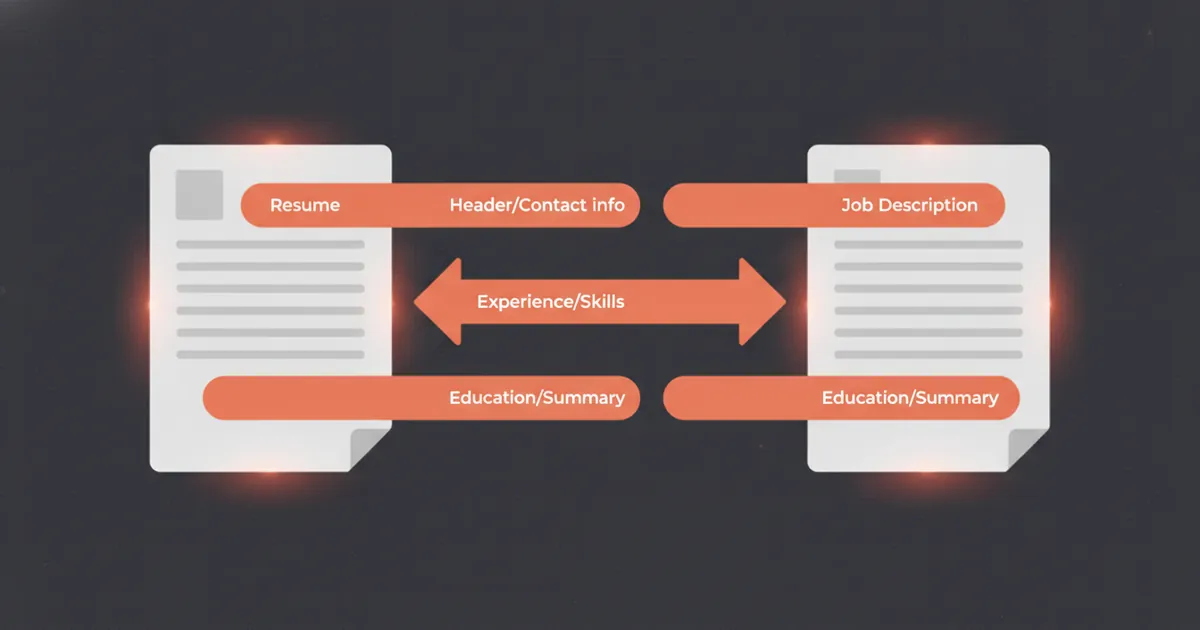
About 98% of Fortune 500 companies use applicant tracking systems, and roughly 75% of resumes are filtered out before a recruiter sees them. Your summary is prime real estate for keywords because ATS systems score keyword density across the full document, and the summary appears first.
Research from Jobscan finds that keyword relevance accounts for 30–40% of ATS scoring. The most efficient strategy: place your primary keyword (your exact target job title, plus one or two critical skills from the job posting) in the summary, then reinforce them once each in your skills section and work experience. Three clean appearances of a term outperforms cramming it in five times.
Use exact phrasing from the job description when it fits naturally. If the posting says "cross-functional stakeholder management," use that phrase, not "working with different teams."
Five Things That Kill an Otherwise Good Summary
1. Filler adjectives used as evidence. "Highly motivated," "detail-oriented," "passionate", every candidate writes these. They occupy space without signaling competence. Replace each adjective with a fact.
2. Too long. A five-sentence block gets skimmed or skipped. Stay at four sentences maximum, three if you can.
3. No numbers anywhere. Even a rough figure beats nothing. "Managed a team" is weaker than "Managed a team of 6 across two time zones."
4. The summary doesn't match the role. This is the most common mistake. A summary written for a previous job application will hurt you on the next one. Tailor the skill cluster and the achievement hook to each posting. It takes five minutes and materially improves your odds. Jobscan data shows tailored resumes are 40% more likely to pass ATS screening.
5. Starting with "I". It reads as informal and wastes your opening word. Start with your title, a skill, or an achievement.
15 Resume Summary Examples by Career Stage
The following examples cover the most common job-search scenarios. Swap in your own details, numbers, technologies, industries.
Entry-Level and Recent Graduates
1. Recent college graduate (business/marketing) Marketing graduate with a B.S. from Penn State and two internships in social media content and paid search. Built and managed a $4,000 monthly ad budget during a summer co-op, generating a 22% improvement in click-through rate. Seeking a digital marketing coordinator role where strong analytical skills and platform fluency translate to measurable campaign results.
2. Recent graduate, no relevant internship Biology graduate with strong research, data analysis, and technical writing skills developed through three lab research projects and a senior thesis. Proficient in R, SPSS, and literature synthesis. Looking to apply a rigorous scientific background to a clinical research coordinator or data-adjacent role in healthcare.
3. Entry-level software developer Junior software developer with hands-on experience building full-stack web apps in React and Node.js. Completed three production-grade projects during a 12-week coding bootcamp, including a task-management app with 200+ active users. Strong foundations in Git, REST APIs, and agile workflows.
Mid-Career Professionals
4. Account manager (5 years) Account manager with 5 years of B2B SaaS experience managing a $2.3M book of business and consistently hitting 108% of annual retention targets. Skilled at executive relationship management, QBR facilitation, and identifying upsell signals. Brings a consultative approach to growing revenue within existing accounts.
5. Software engineer (7 years) Backend engineer with 7 years specializing in Python, distributed systems, and cloud infrastructure on AWS. Reduced API response latency by 40% at current employer by refactoring a monolithic service into event-driven microservices. Experienced in high-throughput environments and mentoring junior engineers.
6. HR professional (6 years) HR generalist with 6 years of experience across talent acquisition, onboarding, and employee relations for teams of 50–300. Redesigned an onboarding program that cut 90-day attrition by 15%. Comfortable operating as a strategic partner to leadership while managing the full operational HR lifecycle.
7. Financial analyst (4 years) Financial analyst with 4 years in FP&A supporting a $180M revenue business unit. Built the monthly variance reporting model currently used across three business lines and contributed to a $14M cost-reduction initiative. CFA Level I candidate; advanced Excel and Power BI.
8. Project manager (8 years, PMP) PMP-certified project manager with 8 years delivering complex technology implementations on time and under budget across financial services and healthcare verticals. Managed concurrent portfolios up to $6M with cross-functional teams of 15+. Track record of cutting scope creep by enforcing structured change-control processes.
Senior and Executive Level
9. Director of Marketing Marketing director with 12 years of B2C experience scaling demand-generation programs from startup to Series C. Led a team that grew qualified pipeline from $8M to $31M over three years through integrated content, paid, and partnership channels. Expertise in marketing attribution, budget allocation, and executive communication.
10. VP of Engineering Engineering leader with 15 years building and scaling product-focused engineering teams, most recently growing a 40-person org from 12 at a Series B fintech. Reduced time-to-production by 35% through CI/CD modernization and quarterly planning reforms. Champions engineering culture, technical debt governance, and hiring strategy.
Career Changers
11. Teacher transitioning to corporate training Secondary school educator with 8 years of curriculum design, classroom facilitation, and learning-outcome measurement transitioning to corporate L&D. Developed a literacy intervention program adopted across 11 schools and trained 60+ teachers on its implementation. Skilled at breaking down complex material for diverse audiences and measuring skill acquisition.
12. Military officer transitioning to operations management Army logistics officer with 9 years managing complex supply chains, personnel, and time-critical operations in high-stakes environments transitioning to civilian operations management. Led a 45-person unit responsible for a $12M equipment inventory with zero accountability failures across three deployments. Security clearance active (Secret).
13. Returning to work after a career break Operations professional with 10 years in process improvement and vendor management returning to the workforce after a three-year family caregiving break. Previously reduced vendor contract costs by $400K annually and implemented a lean workflow that cut order processing time by 28%. Up to date on current project management tools including Asana, Jira, and Notion.
Specialized Situations
14. Freelancer/consultant moving to full-time Brand strategist with 7 years of independent consulting for 30+ DTC and B2B clients ranging from pre-seed startups to $50M enterprises. Consistent track record of repositioning brands that grow revenue, most recently a packaging redesign that drove a 19% lift in conversion rate for a CPG client. Ready to apply portfolio-proven strategy within a focused internal team.
15. Technical role, non-technical summary reader (HR screen) Data scientist with 5 years translating complex datasets into business decisions for retail and e-commerce clients. Led a recommendation engine project that increased average order value by 12% and contributed to a $2.1M revenue gain. Comfortable presenting technical findings to non-technical executives and working cross-functionally with product and marketing teams.
Tailoring Your Summary Without Rewriting It Every Time
The secret to efficient tailoring is a modular summary. Write a core version with your identity, your best achievement, and your skill cluster. Then identify the two or three phrases that are most specific to each job posting, typically the job title variant and one or two technical or domain terms.
Replace only those elements. Your achievement hook usually stays constant because strong results translate across applications. The skill cluster and any "forward bridge" language should mirror the job description's language as closely as sounds natural.
If you're applying to multiple roles at different companies in the same function, you may only need two or three summary variants. If you're targeting genuinely different roles, you need genuinely different summaries, a summary written for a project manager opening won't serve you on a business analyst application.
OfferFlow's resume builder lets you save multiple resume versions with different summaries, so you're not rewriting from scratch each time. You're selecting and lightly editing.
What to Do With an Early-Career Resume That Has Few Achievements
You can still use the formula. Substitute achievements for:
- Academic projects with real outcomes (app with active users, research published, competition placement)
- Internship scope (tools used, team size, deliverables completed)
- Certifications or coursework directly relevant to the role
- Volunteer work that used a transferable skill (event management, grant writing, data entry at scale)
The mistake most recent graduates make is writing a summary that is too vague, "recent graduate with a passion for finance", rather than one that names specific skills and contexts. Specificity, even without years of professional experience, signals seriousness and self-awareness.
See also: resume examples by role and cover letter guides for more tailoring guidance by target job.
Checking Your Draft Against a Simple Test
Before you finalize your summary, run it through these four questions:
- Does it contain at least one number or concrete scope indicator?
- Does the professional identity phrase match the job title you're applying for, or close to it?
- Would a stranger reading only this paragraph understand what you do and what you're good at?
- Does it include any of the banned phrases, "results-oriented," "team player," "hard worker," "passionate about," "synergy," "detail-oriented"? If yes, cut or replace.
If you answered yes to 1–3 and no to 4, your summary is ready to work.
One more thing: run your resume through an ATS check before submitting to roles that matter. Tools that parse your resume the way a hiring system does will surface keyword gaps between your summary and the job description. Catching a missing phrase at this stage costs you nothing; missing it in the application costs you the interview.
For more on matching your resume to job descriptions from top employers, explore interview question guides by role to understand what skills are actually evaluated once you get past the screen, which starts with writing a summary strong enough to get you there.